

Over 82 million people have been infected worldwide, and the number of new COVID-19 cases has continued to climb in recent months. As we anxiously await vaccines, artificial intelligence is already battling the virus on a number of fronts — from predicting protein structure and diagnosing patients to automatically disinfecting public areas.
As part of our year-end series, Synced highlights 10 AI-powered efforts that contributed to the fight against COVID-19 in 2020.
AlphaFold
To help the global research community better understand the coronavirus, UK-based AI company and research lab DeepMind in March leveraged their AlphaFold system to releasestructure predictions for six proteins associated with SARS-CoV-2, the virus that causes COVID-19. In August, DeepMind released additional SARS-CoV-2 structure predictions for five understudied SARS-CoV-2 targets.
AlphaFold was introduced in December 2018. The deep learning system is designed to accurately predict protein structure even when no structures of similar proteins are available, and can generate 3D models of proteins with SOTA accuracy. On November 30, the latest version of AlphaFold was recognized for solving the biennial Critical Assessment of Protein Structure Prediction (CASP) grand challenge with unparalleled levels of accuracy. DeepMind says AlphaFold’s success “demonstrates the impact AI can have on scientific discovery and its potential to dramatically accelerate progress in some of the most fundamental fields that explain and shape our world.”

Diagnosing COVID-19 Infection in Seconds
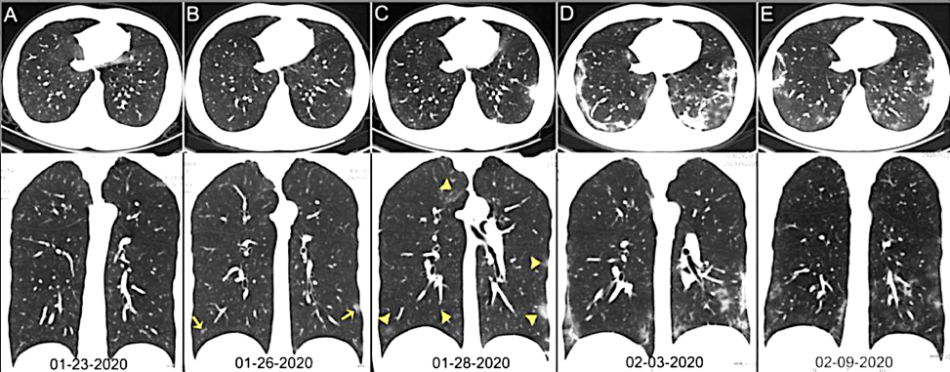
CT (computed tomography) lung scans and nucleic acid tests are the two main diagnostic tools doctors use in confirming COVID-19 infections, and CT imaging is crucial for lung infection diagnosis verification and severity assessment.
In January, the Shanghai Public Health Clinical Center (SPHCC) partnered with Chinese AI startup YITU Technology’s healthcare division — which provides AI-powered medical imaging solutions for lung cancer diagnosis — to build an AI CT image reader.
By February 5, the AI diagnostic system had been deployed in four Hubei province hospitals struggling with ongoing doctor and supply shortages. Functionalities catering to the specific needs of clinical departments such as radiology, respiratory, emergency, intensive care, etc., were built into the system.
COVID-19 Open Research Dataset Challenge
In response to the COVID-19 pandemic, the US White House joined with research groups in March to announce the release of the COVID-19 Open Research Dataset (CORD-19) of scholarly literature about COVID-19, SARS-CoV-2, and the coronavirus group. The release came with an urgent call to action to the world’s AI experts to “develop new text and data mining techniques that can help the science community answer high-priority scientific questions related to COVID-19.”
The online ML community Kaggle is hosting a CORD-19 dataset challenge that defines 10 tasks based on key scientific questions developed in coordination with the WHO and the National Academies of Sciences, Engineering, and Medicine’s Standing Committee on Emerging Infectious Diseases and 21st Century Health Threats.
Folding@Home
Developed by the Pande Laboratory at Stanford University in 2000 as a distributed computing project for simulating protein dynamics — including the process of protein folding and the movements of protein implicated in a variety of diseases — the Folding@Home project aims to build a network of protein dynamics simulations run on volunteers’ personal computers to provide insights that could help researchers develop new therapeutics.
The current focus of Folding@Home is modelling the structure of the 2019-nCoV spike protein to identify sites that can be targeted by therapeutic antibodies. Coronaviruses invade cells via spike protein on their surfaces, which binds to a lung cell’s receptor protein. Understanding the structure of viral spike protein and how it binds to the ACE-2 human host cell receptor can help scientists stop viral entry into human cells. Anyone who would like to donate their unused computing power can join Folding@Home’s fight against the coronavirus.

COVID-Net
In March, Canadian startup DarwinAI released COVID-Net, an open-sourced neural network for COVID-19 detection using chest radiography (X-Rays). Company CEO Sheldon Fernandez says COVID-Net has been leveraged by researchers in Italy, Canada, Spain, Malaysia, India and the US.
Fernandez explains that rather than treating AI as a tool, his company reimagines AI as a collaborator that learns from a developer’s needs and subsequently proposes multiple design approaches with different trade-offs in order to enable a rapid and iterative approach to model building.
Covid-Sanity
In response to the COVID-19 pandemic, Andrej Karpathy — director of artificial intelligence and Autopilot Vision at Tesla and developer of the arXiv sanity preserver web interface — introduced “Covid-Sanity,” a web interface designed to navigate the flood of bioRxiv and medRxiv COVID-19 papers and make the research within more searchable and sortable.
Covid-Sanity organizes COVID-19-related papers with a “most similar” search that uses an exemplar SVM trained on TF-IDF feature vectors from the abstracts of the papers. This is similar to the Google search engine, which responds by finding the relevance of a query in all texts, ranks by similarity scores and returns the top-k results. Based on paper abstracts, the web interface returns all papers similar to the best-matched paper result to a query.

Volunteer Drone Teams for COVID-19 Disinfection
Disinfection of public areas is a challenging but crucial process in the fight to stop the spread of the COVID-19. In China, ad hoc teams of DJI drone hobbyists sprung up nationwide to provide this service for free. By February, total DJI agricultural drone disinfection coverage had exceeded 600 million square meters across more than 1,000 villages — including schools, isolation wards, food waste treatment plants, waste incineration plants, livestock and poultry epidemic prevention centres and more.
Shenzhen-based DJI is a leading drone and associated technologies company. In February they launched the “DJI Army Against the Virus” project, providing subsidies to support working pilots, with provisions for pilot protective kits and assistance to villages who perform drone disinfection. Spare parts and drone repair services were also provided during the missions.

Autonomous Delivery Vehicles Navigate the Pandemic
Many AI-powered autonomous vehicles navigated Chinese streets in response to the COVID-19 outbreak. Developed and modified for the purpose by Chinese O2O local life service company Meituan, Modai (“Magic Bag”) vehicles delivered much-needed groceries to communities in Beijing’s Shunyi District.
Self-driving delivery vehicles like Modai were an effective solution to the COVID-triggered surge of online grocery orders and the need to reduce interpersonal contact to slow disease spread. The urgent needs and empty streets drew many companies into autonomous delivery — JD Logistics developed self-driving delivery vehicles in Wuhan and for the first time delivered medical supplies to the Wuhan Ninth Hospital, and the Suning Logistics 5G Wolong self-driving car delivered its first orders in Suzhou.

Hand Washing AI
Japan’s Fujitsu Ltd developed an artificial intelligence monitor to ensure healthcare, hotel, and food industry workers wash their hands properly, according to a Reuters report. The system is based on crime surveillance technology that detects suspicious body movements, and can recognize and classify complex hand movements. It checks whether people complete a Japanese health ministry six-step hand washing procedure similar to guidelines issued by the WHO (clean palms, wash thumbs, between fingers and around wrists and scrub fingernails). The monitor can even tag instances of people not using soap.

AI-Assisted Elder Care Solution
Fei-Fei Li, Stanford computer science professor and co-director of Stanford’s Human-Centered AI Institute (HAI), shared her thoughts on AI technologies that could help seniors during the coronavirus pandemic in April’s COVID-19 and AI: A Virtual Conference. Li identified AI-powered smart home sensor technology as a way to help families and clinicians remotely monitor housebound seniors for infection symptoms or symptom progression or regression and potentially also help manage their chronic health issues.
Research institution Strategy Analytics predicts the smart home market will resume in 2021 and consumer spending will increase to US$62 billion. The post-pandemic global smart home device market is expected to maintain a compound annual growth rate of 15 percent.
As efforts to control the spread of COVID-19 continue, contact tracing has emerged as a public health tool where ML can play an important role in optimizing systems. Various countries have developed digital contact tracing processes with mobile applications, utilizing technologies like Bluetooth, the Global Positioning System (GPS), social graphs, network-based API, mobile tracking data, system physical addresses, etc. These apps collect massive data from individuals, which ML and AI tools analyze to identify and trace vulnerable people.
A study published by the US National Library of Medicine shows that by June, over 36 countries had successfully employed digital contact tracing systems using a mixture of ML and other techniques.


Reporter: Yuan Yuan | Editor: Michael Sarazen

Synced Report | A Survey of China’s Artificial Intelligence Solutions in Response to the COVID-19 Pandemic — 87 Case Studies from 700+ AI Vendors
This report offers a look at how China has leveraged artificial intelligence technologies in the battle against COVID-19. It is also available on Amazon Kindle. Along with this report, we also introduced a database covering additional 1428 artificial intelligence solutions from 12 pandemic scenarios.
Click here to find more reports from us.

We know you don’t want to miss any news or research breakthroughs. Subscribe to our popular newsletter Synced Global AI Weekly to get weekly AI updates.
Great roundup — the AlphaFold protein structure work and the YITU CT reader really capture how quickly AI moved from research labs into clinical settings during 2020. One thing I’d add is that the same deep learning foundations behind those protein folding and medical imaging breakthroughs are now being applied in far more everyday domains, from dermatology apps to more experimental consumer tools like AI palm reading, which analyzes a photo of your hand to generate personality and future insights. It’s obviously a very different use case from COVID diagnostics, but it shows how the underlying image recognition and pattern-matching techniques have matured and spread. Curious to see which of the ten tools from this list end up with lasting impact beyond the pandemic itself.
This list holds up well as a snapshot of how quickly the research community mobilized in 2020 — DeepMind’s AlphaFold releases and the CORD-19 challenge in particular, since both showed that open, shared infrastructure can compound far faster than any single lab’s effort. One thing worth adding: many of the tools here ended up depending as much on community curation as on the models themselves, which is where a dedicated AI for science resource hub becomes genuinely useful. It aggregates news, tools and reference material across AI-for-research, so instead of hunting through scattered preprints and repos you can track how projects like these evolved after 2020 and what replaced them. For anyone revisiting this era of rapid tooling, that kind of continuity is the missing piece.
The AlphaFold section really stood out to me — DeepMind releasing those SARS-CoV-2 structure predictions in March gave researchers a massive head start when experimental pipelines were completely overwhelmed. One thread this roundup only hints at is how quickly these tools had to localize for non-English speaking users. The YITU CT reader in Hubei is a good example: clinicians needed interface labels, symptom terminology, and reporting conventions in Chinese, not just accurate inference. That language layer is easy to overlook in the rush to ship models. For anyone curious how technical vocab like 冠状病毒 or 核酸检测 actually gets learned, resources such as this Chinese zodiac and vocabulary practice site make the terminology side far less intimidating. Worth keeping in mind as these AI diagnostics scale into multilingual hospital systems.
Really appreciate this roundup — the AlphaFold section especially resonates, since the downstream bottleneck after structure prediction is almost always visualization and figure preparation. One thing worth adding: a lot of these COVID-19 efforts (CORD-19 challenges, CT imaging studies, protein papers) generate findings that still need clean, publication-ready figures, and that’s often where researchers lose entire days. I’ve found publication-ready AI figure tools useful here — you can also upload data to auto-generate charts, build flow diagrams, and export to SVG for further editing, which cuts the figure-making process down considerably. For teams racing to publish COVID-19 results, that time saved is non-trivial. Curious how much figure prep factored into the workflows described in 2020.
Fascinating retrospective – it is easy to forget how quickly the AI community mobilized in 2020. AlphaFold’s SARS-CoV-2 structure predictions stand out the most to me: releasing those structures openly probably accelerated work in dozens of labs at once. Five years on, what strikes me is how many emergency-era tools matured into everyday products, and how the harder problem now is discovering which tool fits which workflow – that is exactly the gap the directory I run, WayPointo, tries to help with. Thanks for archiving this list; it is a great snapshot of the field under pressure.
Great roundup of how AI contributed to the pandemic response in 2020. The AlphaFold protein structure work and the YITU CT reader in Hubei hospitals both stood out, and it is encouraging to see how quickly research and deployment came together under pressure. One angle I would add is that AI has also reshaped how people spent their lockdown time, boosting interest in interactive storytelling and browser-based games. Sites like play free otome visual novels curate hand-reviewed romance and short story titles that run directly in the browser without downloads or signup, which mirrors the same “instant access” philosophy these medical tools pursued. Thanks for documenting 2020 so thoroughly.
Great roundup — the CORD-19 challenge and Folding@Home entries really underline how much of 2020’s AI momentum came from open datasets and distributed compute rather than closed labs. One underrated angle is how quickly these tools moved from research papers into practical, hands-on workflows for non-specialists, which is where lightweight web utilities shine. I’ve noticed the same shift in design and fabrication: what used to need expensive software now runs in a browser. For anyone doing tattoo linework or Cricut-style cutting, there’s a handy photo to stencil converter that exports SVG/DXF/PNG/PDF in seconds, with a free printable stencil library. It’s a small example of the broader trend this article captures — AI-adjacent tooling lowering the barrier to entry. Looking forward to the 2021 edition.
It is fascinating to see how rapidly artificial intelligence was deployed to support scientific research and diagnostic processes during the peak of the pandemic. The ability to model protein structures at such a high level of accuracy represents a significant milestone for computational biology.
The application of machine learning for protein structure prediction during the pandemic highlights the significant role computational tools play in advancing scientific research and medical diagnostics.
Solid retrospective – it is striking how many of these deployment patterns (triage assistance, contact tracing, drug repurposing searches) became permanent fixtures rather than emergency stopgaps. The data-cleanup bottleneck mentioned for several of these tools still defines most AI projects today. Thanks for keeping this archive accessible.
The AlphaFold entry deserves the headline, because getting the CASP14 targets right within days is a different category of result from the rest of this list. Worth noting that none of these were chat interfaces, they were tools for people who already knew the domain deeply. Having spent the last year on the opposite end of the stack, where there is no domain knowledge to assume and just a caller and a menu, the contrast is instructive. Our version of the same problem is that the numbers have to come back out character by character, which is what an IVR voice generator is for.
Rereading this list now that AlphaFold has been running for years, the part that has aged most is not the modelling, it is the contact tracing. Most countries that tried to notify exposed people by text ended up sending codes to numbers that had already been reassigned, and the resulting false alarms did real damage to public trust in the whole approach. Before a list like this existed, almost nobody had thought about what a temporays phone number i can use for verification is actually for.
Four years on the detail that has aged best is not the protein structures but the deployment timeline. YITU’s CT reader reaching four Hubei hospitals by February 5 is a month from contract to clinical use, and none of the model accuracy matters if a hospital will not point a scanner at the output. Same logic in anything security-shaped: a temporary phone number for verification is worth more than a correctly predicted number, for the same reason. Worth reading this one now that the predictions have had time to be checked.
The AlphaFold release cadence here is the part I remember most clearly, six structures in March and then five more in August. It is a good reminder that most of the early progress was about getting predictions into researchers hands ahead of the wet lab work, not one single modelling breakthrough. I keep coming back to roundups like this when I need the wider picture of a field in a given year. The protein diagrams from that year are a chat gpt image generator these days.
Your latest demo may have the right melody, yet another vocal tone could reveal a different mood. It gives you a direct way to judge how voice alone shapes the song’s atmosphere. Explore ai song cover to hear your track with a different licensed voice while keeping its musical foundation. Pick an authorized recording, explore the available voices, and generate a short listening sample. An adjustable pitch setting gives you another way to fit the selected voice to your song. You can make a listening decision from the free preview before spending credits on the finished full-song file. Find out whether the new vocal tone adds the energy your track needs.
This retrospective shows how broad “AI for COVID-19” was—from protein structure prediction to diagnostics and public-health operations. A follow-up on which evidence and tools endured would be valuable; AI Answer can help readers gather current coverage with source links when revisiting these topics. Thanks for collecting the examples in one place.
The section on AlphaFold and the CORD-19 challenge really captures how quickly the research community mobilised in 2020 — what struck me was how many of these tools were essentially repurposed from existing pipelines rather than built from scratch, which says a lot about the value of open datasets and shared infrastructure. One thing worth adding for anyone interested in how modelling work like this eventually reaches ordinary users: simulation and economy systems in games now borrow similar ideas, and I found the breakdowns at game economy and job guides oddly instructive for seeing how pay scales, rent, fuel costs and payback times get balanced against each other. It is a very different domain from epidemiology, but the underlying logic of modelling a system, validating numbers and publishing the assumptions feels quite familiar after reading this review.
A 2020 list of ten tools is what I opened, and I wanted each one tied to one job rather than piled into a single recap.
This is a solid retrospective — the AlphaFold and CORD-19 entries especially show how quickly the research community mobilised in early 2020, and the YITU CT reader deployment in Hubei is a good reminder that a lot of the practical AI impact happened quietly in clinical settings rather than in headline-grabbing demos. One thing that often gets lost in year-end lists like this is the maintenance question: a surprising number of those tools and their dependencies were still being patched and re-documented well into 2023, and the same pattern shows up in game and simulation software, where a single graphics or physics update can invalidate months of community documentation. I’ve been following how one fan community handles that for Witcher 3 remaster changes and patch notes, keeping skill tree, Reforge and save transfer details current after each hotfix. Curious how many of the 2020 COVID tools got that kind of sustained upkeep.
DeepMind’s March AlphaFold release covered six SARS-CoV-2 proteins, and the August follow-up added five understudied targets.
While vaccines were still pending, the piece frames AI as already fighting COVID-19 on several fronts, from protein structure prediction to public-area disinfection.
EveryGen AI is an AI video and image generator. Creators turn text, photos, and existing footage into new content with leading AI models, all in one creative workspace.